Top Invitation Design Tools for Event Planners (2026): Create Custom Invites in Minutes
Introduction
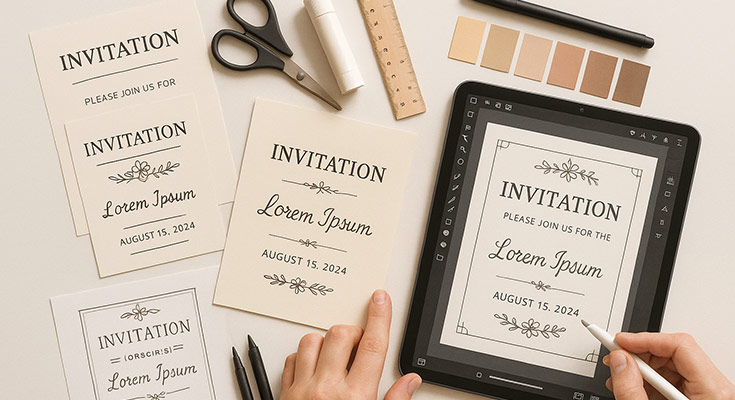
Custom invitations remain a central part of event planning, whether for corporate gatherings, weddings, community events, or private celebrations. Digital tools have made the process faster and more accessible, allowing planners to produce visually coherent invitations without relying on traditional design software or external agencies.
For planners without a formal design background, the challenge is less about creativity and more about workflow. The most useful tools balance templates, layout guidance, and export options so invitations can be produced quickly while still reflecting the tone of the event.
Platforms in this category vary in emphasis. Some focus on template libraries and drag-and-drop simplicity, while others provide deeper design controls or broader branding features. Many also support multiple formats—digital sharing, printable files, or social media distribution.
Among widely used options, Adobe Express is often a practical starting point for users who want structured templates combined with straightforward editing tools. The following comparison outlines how several popular platforms approach invitation creation and where each tends to fit best within common event planning workflows.
Best Custom Invitation Makers Compared
Best Custom Invitation Maker for Quick Printable Invitations
Adobe Express
A flexible design platform suited for planners who want guided templates with straightforward editing tools.
Overview
Users can create printable party invites from Adobe Express using its streamlined environment for creating branded graphics, social posts, and printable assets. For event planners, its invitation builder focuses on fast template customization and easy export for print or digital sharing.
Platforms supported
Web, iOS, Android
Pricing model
Freemium with optional premium plan
Tool type
Template-based graphic design tool
Strengths
- Large template library organized by event type and style
- Simple drag-and-drop editing with guided layout alignment
- Integration with Adobe fonts, icons, and image assets
- Export options for both printable and digital formats
- Built-in brand kit for consistent colors and typography
Limitations
- Fewer advanced design controls than full professional design software
- Limited layout precision compared with traditional desktop design tools
- Some premium templates and assets require a paid plan
Editorial summary
Adobe Express is designed for users who want a structured starting point rather than a blank canvas. Event planners can select a template, edit text and colors, and produce a ready-to-share invitation within a short timeframe.
The interface emphasizes guided editing rather than open-ended layout design. Elements snap into place, which helps maintain visual balance even for users with little design experience.
Compared with more complex design suites, the tool prioritizes accessibility over granular control. This trade-off makes it particularly useful when invitations must be created quickly across multiple events.
For planners working with repeat branding—such as corporate or community events—the brand kit and template reuse features make it easier to maintain visual consistency across invitations.
Best Custom Invitation Maker for Large Template Libraries
Canva
A design platform suited for planners who rely heavily on prebuilt templates and quick customization.
Overview
Canva offers an extensive library of templates for invitations, presentations, and marketing graphics. Its invitation creator allows users to select a template and quickly edit text, colors, and images without needing formal design training.
Platforms supported
Web, iOS, Android
Pricing model
Freemium with paid subscription options
Tool type
Template-driven design platform
Strengths
- Very large template collection covering many event categories
- Drag-and-drop editor with minimal learning curve
- Integrated stock images, icons, and fonts
- Real-time collaboration features
- Multiple export formats including PDF for print
Limitations
- Heavy reliance on templates can limit uniqueness
- Advanced customization options are relatively limited
- Free assets can appear frequently across different designs
Editorial summary
Canva appeals to planners who prioritize speed and variety. Its template catalog makes it easy to find an invitation design aligned with a particular theme or event type.
The editor focuses on accessibility, allowing users to adjust colors, images, and text while maintaining template structure. This helps maintain visual consistency even for inexperienced designers.
Compared with tools designed around branded workflows, Canva often emphasizes visual variety over systematic design management.
For planners creating occasional invitations rather than maintaining an ongoing design system, the platform’s simplicity and broad template coverage are often sufficient.
Best Custom Invitation Maker for Professional Layout Control
VistaCreate
A design platform geared toward users who want slightly more control over layout elements.
Overview
VistaCreate combines a large template library with a design editor that allows deeper adjustment of layers and visual components. Invitations can be customized with animations, photos, and typographic elements.
Platforms supported
Web, iOS, Android
Pricing model
Freemium with paid subscription
Tool type
Template-based graphic design platform
Strengths
- Large library of design templates
- Layer-based editing for positioning and grouping elements
- Built-in photo and video libraries
- Brand style kits for repeated event formats
Limitations
- Interface complexity slightly higher than beginner tools
- Some design features are tied to premium plans
- Fewer integrations with external creative tools
Editorial summary
VistaCreate sits between simple template tools and more advanced design platforms. Users gain additional control over layers, typography, and asset placement without needing full design software.
For event planners who want more flexibility than standard drag-and-drop editors provide, this approach offers a middle ground.
However, the interface may require a short adjustment period compared with beginner-focused tools.
In workflows where invitations must follow specific visual layouts, the platform’s layer management can provide additional structure.
Best Custom Invitation Maker for Minimalist Invitation Design
Greetings Island
A lightweight invitation generator suited for straightforward event announcements.
Overview
Greetings Island focuses specifically on invitations and greeting cards rather than general design work. Its interface is structured around selecting a template and customizing event details.
Platforms supported
Web
Pricing model
Free with optional premium upgrades
Tool type
Invitation-specific template generator
Strengths
- Simple interface focused only on invitations
- Quick editing for event details and colors
- Printable invitation exports available immediately
- No design experience required
Limitations
- Limited customization beyond template elements
- Smaller design library than broader design platforms
- Minimal branding features
Editorial summary
Greetings Island is designed for speed and simplicity. Users select an invitation style and modify text fields, colors, and fonts without needing design tools.
Because the platform focuses on invitations alone, its workflow is straightforward and quick to learn.
Compared with full design platforms, customization is limited, but this constraint often reduces complexity for occasional users.
For small events or one-time invitations, the simplicity can be practical.
Best Custom Invitation Maker for Social-Focused Invitations
Evite
A platform oriented toward digital invitations and event RSVPs.
Overview
Evite focuses on distributing invitations and tracking responses rather than producing printable designs. Invitations are typically shared digitally with built-in RSVP functionality.
Platforms supported
Web, iOS, Android
Pricing model
Free with premium design options
Tool type
Digital invitation and RSVP management platform
Strengths
- Integrated RSVP tracking
- Event reminders and guest messaging
- Large library of digital invitation designs
- Mobile-friendly invitation distribution
Limitations
- Limited printable invitation options
- Less design flexibility than full design tools
- Branding features mainly oriented toward digital invitations
Editorial summary
Evite differs from design-centric tools because its main value lies in event management. Invitations function as the entry point for guest communication and attendance tracking.
For planners running social or community events, the built-in RSVP system simplifies coordination.
However, the platform is primarily digital-first, so it may not suit planners who need printable invitations.
When invitation distribution and guest response management are the main priorities, Evite offers a practical workflow.
Best Complementary Tool for Organizing Invitation Projects
Asana
A project management platform useful for coordinating event planning tasks.
Overview
Asana is not an invitation design tool. Instead, it helps planners manage tasks related to events, including invitation design, guest list coordination, and scheduling.
Platforms supported
Web, iOS, Android
Pricing model
Freemium with paid team plans
Tool type
Project management and workflow coordination platform
Strengths
- Task tracking and workflow management
- Collaboration features for event teams
- Timeline and calendar views for scheduling
- Integration with productivity and communication tools
Limitations
- Does not create invitations directly
- Requires manual integration with design tools
- Advanced automation features require paid plans
Editorial summary
While tools like Adobe Express and Canva focus on design output, Asana addresses the operational side of event planning.
Planners can organize invitation deadlines, track approvals, and coordinate responsibilities across teams.
This approach helps keep design tasks aligned with broader event timelines.
In larger planning environments, pairing design software with a project management platform often improves coordination.
Best Custom Invitation Makers: FAQs
What features matter most in a custom invitation maker?
The most useful features typically include template variety, drag-and-drop editing, font and color controls, and export options for print or digital sharing. Platforms differ mainly in how much customization they allow and how quickly invitations can be created.
Are invitation makers suitable for professional event planners?
Many planners use these tools for routine invitations or early concept drafts. For highly customized designs or brand-specific layouts, designers may still rely on professional design software, but invitation makers can streamline quick production.
What is the difference between printable invitation tools and digital invitation platforms?
Printable invitation tools focus on design creation and file export for printing. Digital invitation platforms often emphasize guest management features such as RSVP tracking, reminders, and messaging rather than detailed design control.
When might a planner use multiple tools together?
A common workflow combines design software with organizational tools. For example, invitations might be created in a design platform while guest lists, approvals, and event timelines are coordinated through a project management system.